

madonna
on little pilgrimages
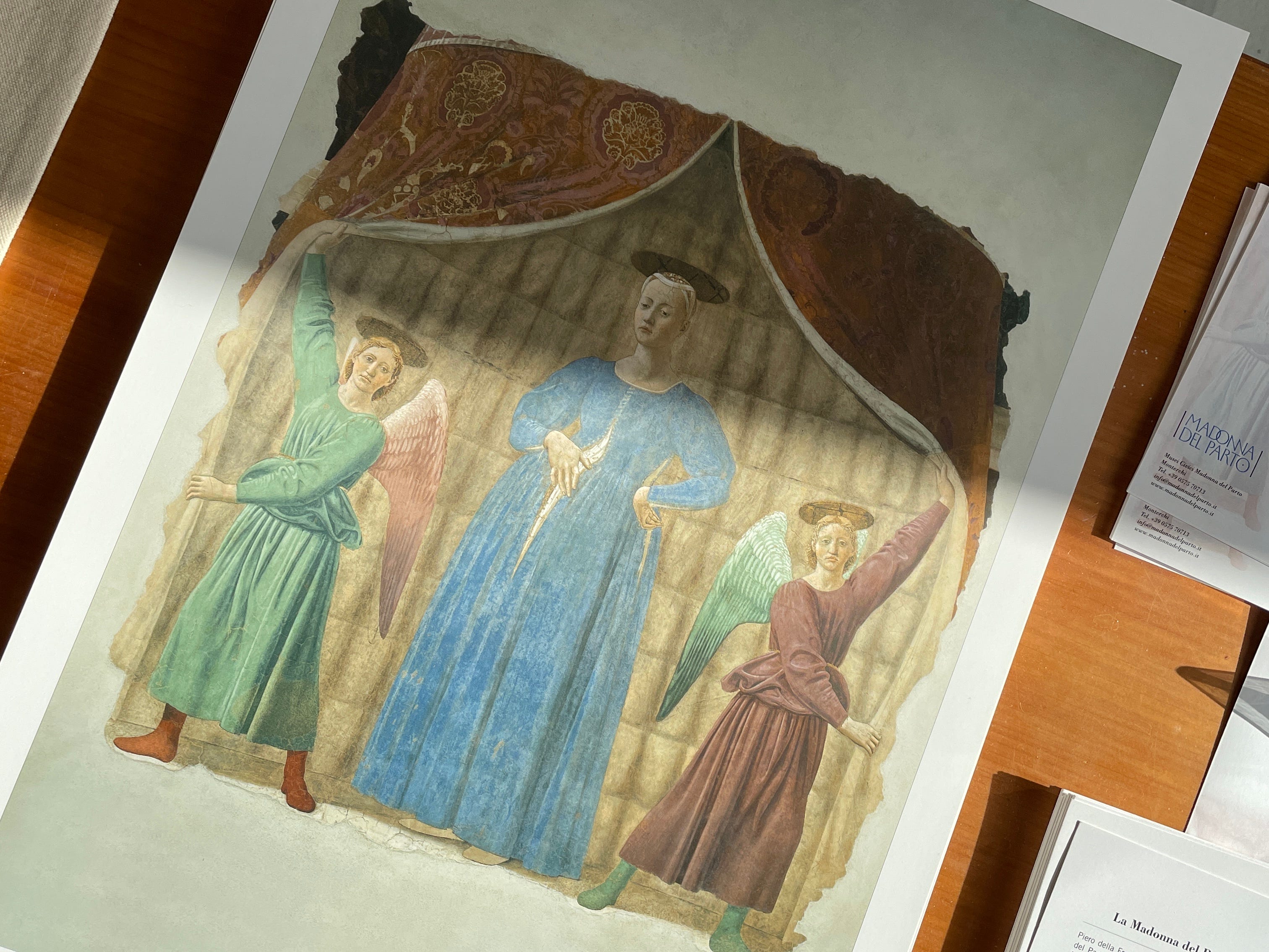
Before you see her, you must push through two thick curtains, almost the colour of her dress - pale blue. She used to be on a wall in a chapel, and now the Madonna del Parto is in a white building all of her own, squat and institutional and quiet; a museum you sense doesn’t get many visitors, unceremoniously tucked on the edge of the road leading out of town.
It’s a Sunday afternoon and Monterchi is sleepy; the only evidence I can find of the couple who run the one shop open is in a faded photograph on its door. Baskets of chestnuts and freshly picked mushrooms, the size of a baby’s head, sit by entrance to the cafe. There are no people around.
We have descended on the museum in a little crocodile, fresh off a minibus with a driver who will wait for us when we want more time with her. And one by one we go through the pale blue curtains and into the dimly lit room. There, flanked by angels, she stands: a woman who, 600 years on, still acts as a mirror to other women. The angels are pulling back the curtains of a fur-lined tent to reveal her: part-miracle, part-magic trick. The Madonna of Childbirth.
Pregnant women don’t have to pay the €6.50 entrance fee. It’s only recently, given how long she’s been around, that such monetary demands were made; the Madonna moved to what used to be the town’s primary school in the Nineties. Before then she stood in a chapel in the cemetery of the church that used to hold her, somehow spared by the earthquake that ruined the town’s centre, protected by Monterchi’s people. They had been praying to her about their babies, for their babies, for centuries; they were not going to let her go into storage because of the war.